
SEO to GEO: A Guide to Search Strategy in the AI Era
The evolution of SEO is underway. Here's an overview of how to start approaching AI-driven visibility.
Molly Stephens
Business Development · July 26, 2026 · 3 min read
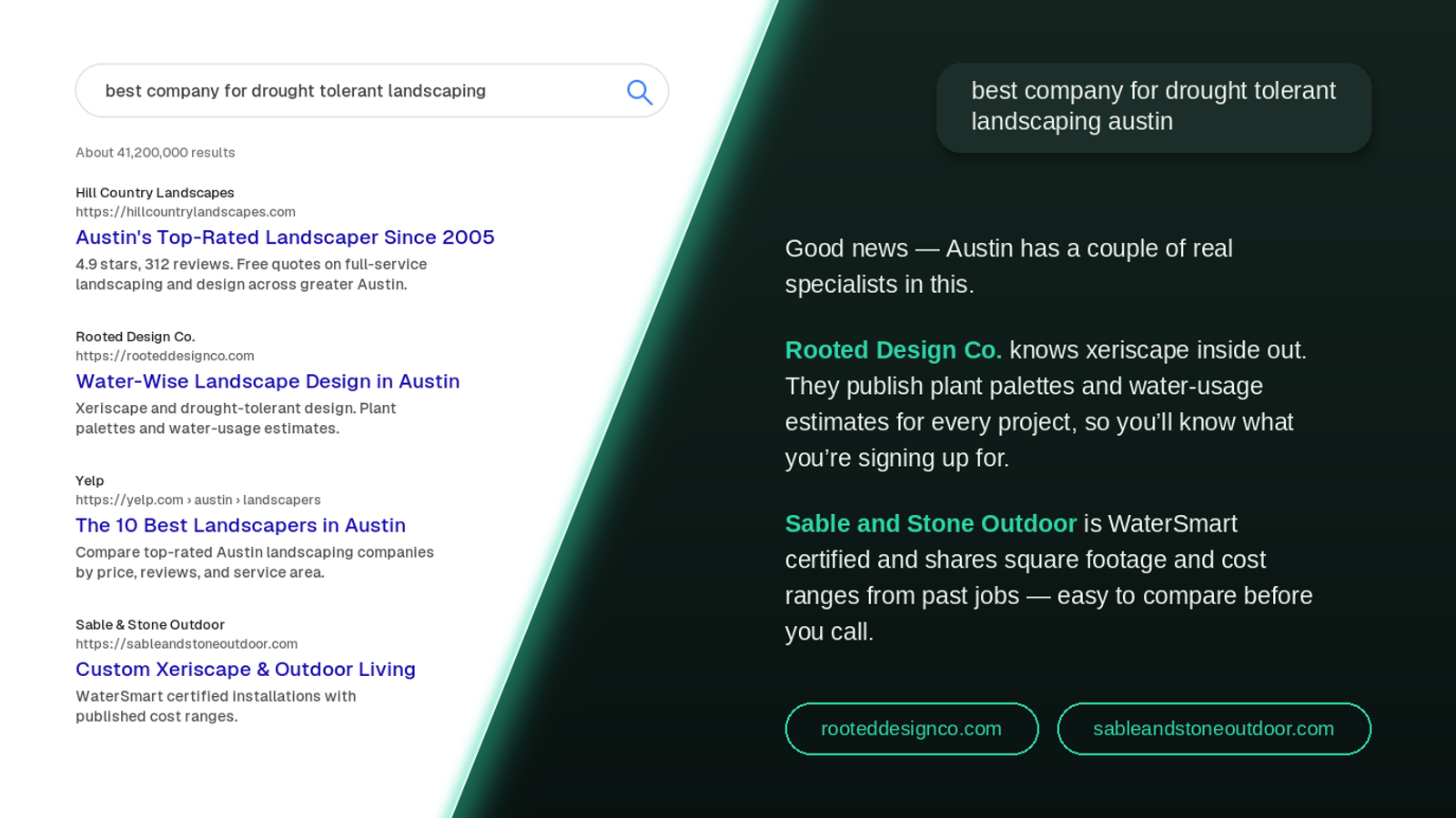
Consider a landscaping company in Austin, Texas, whose Google Business Profile is fully optimized and ranks #1 for the query “best company for drought-tolerant landscaping in Austin.” By the standards that governed digital marketing for the past two decades, this business has already won.
Yet an increasing share of prospective customers no longer begin their search on Google. They ask ChatGPT instead, and may never encounter this business at all, despite no underlying change in its reputation.
The relevant question is no longer whether a business can secure a top position in traditional search. It is whether an AI model can understand what that business does, compare it against alternatives, represent it correctly, and recommend it. That is a fundamentally different standard of visibility.
SEO Versus GEO: A Structural Comparison
The objective itself, being found by the right customer, has not changed. Nearly every mechanism beneath it has:
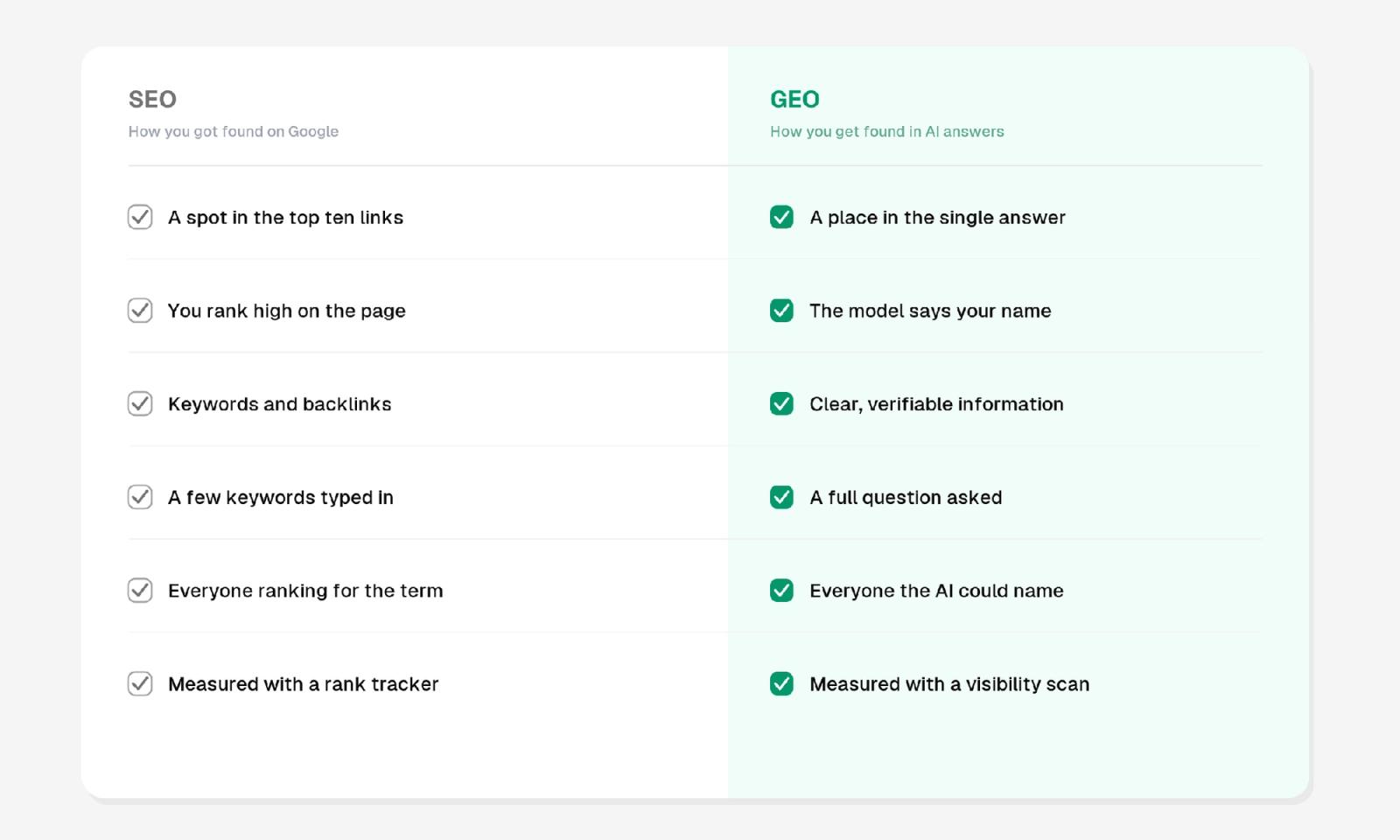
Much of the groundwork carries over. The clear, well-structured, credible content that helped a page rank also helps AI models understand, trust, and cite it. GEO builds on that foundation rather than discarding it.
What changes is the contest itself. Where SEO was a ranking contest, GEO is a reference contest. A business is either named in the answer or absent from it, and what earns the mention is verifiable information, not keyword density.
What This Looks Like in Practice
In our example, Hill Country Landscapes holds the strongest traditional SEO signals available: the highest review count, the top organic position, and more than a decade of history. It is nonetheless absent from the AI answer. Its website never states what a model needs in order to compare and recommend it, namely certifications, service scope, and documented project detail.
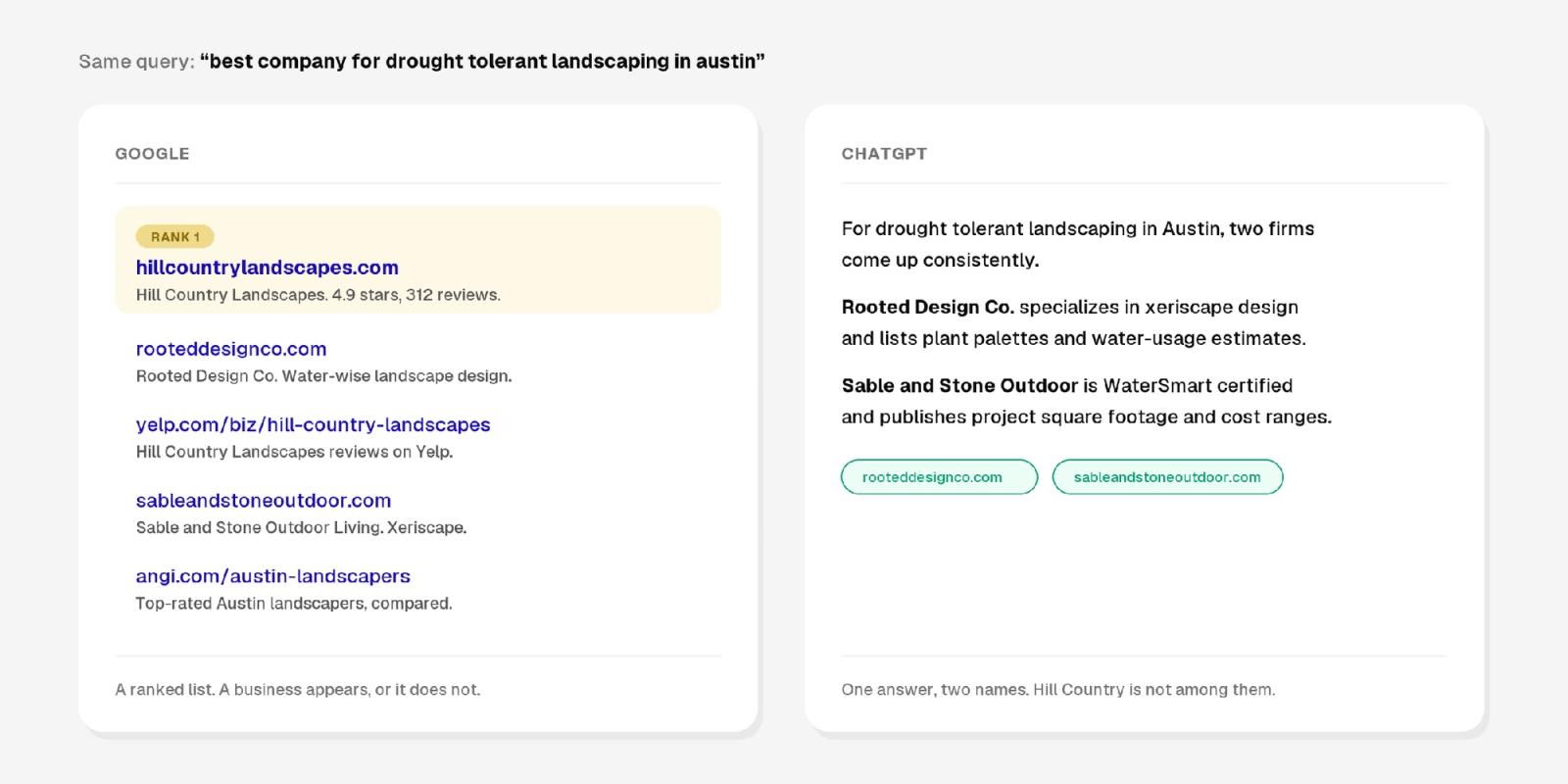
Identical query, divergent outcomes: Hill Country Landscapes ranks first on Google yet is absent from the AI-generated answer.
Rooted Design Co. and Sable and Stone Outdoor are not better known; they are simply more legible. Their websites state what they do, for whom, and how, in language a model can reuse with confidence.
Why the Distinction Matters
The consequence of this shift is not confined to visibility. Traditional search is increasingly providing information directly on the search results page rather than sending users to websites. Bain & Company reports that between 60 and 93 percent of searches now conclude without a click on a search result[1]. At the same time, Adobe Digital Insights finds that AI-driven shopping traffic to United States retail sites has grown 4,700 percent year over year[2].
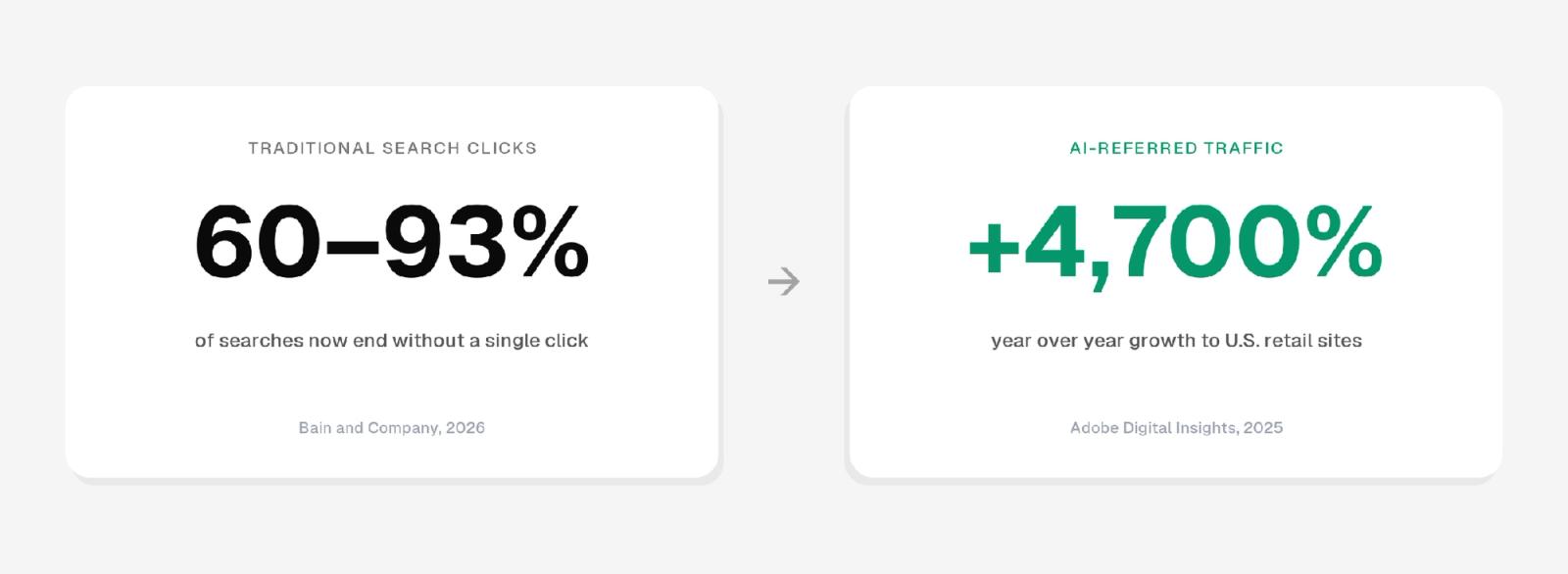
The two trends point in the same direction. Traditional search is becoming less dependent on clicks to external websites, while AI is becoming a rapidly growing source of referral traffic. A business absent from AI answers is therefore not simply losing incremental traffic. It is excluded from the one segment of search still expanding.
The revenue mechanics behind this shift are addressed at length in What an AI Citation Is Worth.
Determinants of Citation
Whether a business is cited depends on what this guide terms legibility: the degree to which an AI model can determine what a business offers and to whom. In practice, that means stating precisely what a business does and for whom. It means publishing verifiable specifics rather than general claims. And it means keeping that information consistent everywhere it appears.
Learn more about the role structured data plays in helping AI models understand your business in How Structured Data Helps AI Cite Your Business.
Assessing Current Standing
The businesses that appear in answers are, almost without exception, those structured to be understood. That advantage compounds over time, much as ranking first on Google came to matter more with each passing year.
To determine whether AI is naming a given business or a competitor's, run your free AI visibility scan.
References
- [1]a16z, “How Generative Engine Optimization (GEO) Rewrites the Rules of Search”https://a16z.com/geo-over-seo/
- [2]Bain and Company, “Goodbye Clicks, Hello AI: Zero-Click Search Redefines Marketing”https://www.bain.com/insights/goodbye-clicks-hello-ai-zero-click-search-redefines-marketing/